Product identity
Identify exactly what the record describes.
- Model / SKU and product description
- Purchase reference and batch number
- Manufacturer and production location
Connect what you ordered with how it was made, checked and delivered.
A useful sourcing record brings specifications, supplier information and dated documents together—so the next decision is based on more than a product photo.
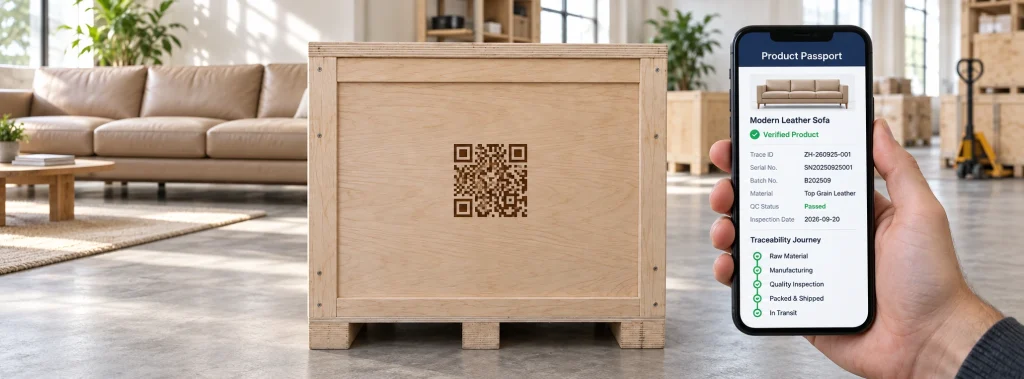
Try sample ID ZH-260925-001. This lookup opens the example passport, not private buyer or order records.
Use this structure to request records for a purchase. Available documents and access are confirmed with the record owner.
Identify exactly what the record describes.
Keep a baseline for comparison.
Connect key inputs to the finished product.
Understand the recorded milestones.
Read what was checked and by whom.
Link the file to the goods you receive.
Bring the approved dimensions, materials, finishes and drawings into one record. Keep the approval date and version, so production and later checks refer to the same requirements.

Connect the purchase reference, production lot and available material references. Record colour, finish and component details so later deliveries can be checked against the batch you approved.

Keep process updates, checkpoint photos and any approved changes alongside the order. Identify the date and responsible contact for each update, including rework and completion notes.

Review the inspection date, product coverage, findings and report issuer. Connect any corrective action and recheck to the same goods before recording the release decision.

Match carton marks, package counts and packing photos to the product batch. Retain the packing list, shipment reference and receiving notes so the delivered goods can be reconciled with the order.

Retain model references, approved finishes and revision history for future purchases. Use them to explain a replacement or discrepancy, and ask the supplier to confirm changes before a repeat order.

A generic certificate or factory photo cannot answer every product question. Start with the model, intended use and the specifications agreed for your purchase.
Download Record Checklist (.txt)For an inspection status or certificate, check the product covered, the issuer, the date and the original document. A QR code locates a record; the linked evidence explains what it means.
Explore Supplier & Credential ReviewIssuer, inspector or record owner.
Model, batch and inspection scope.
Issue date and applicable validity.
Original file and a review contact.
Refer to the original model, finish, drawing revision and batch. Ask the supplier to confirm any changes before the next production run.
Useful references: approved sample + version history.
Connect goods to the room or zone schedule and delivery phase. Keep a record of what has arrived and what remains outstanding.
Useful references: batch map + packing list.
Describe the issue with the model, carton mark, delivery date and photos. Compare it with the approved specification and receiving record.
Useful references: specification + receiving notes.
The linked passport is a clearly labelled demonstration of the record structure. It does not include private purchase files or certify an actual product.
No. Availability and access depend on the document owner, confidentiality and the purchase involved. Confirm authorised access for the specific records you need.
Ask the issuer or supplier to explain its coverage and provide the applicable document. Do not assume that a report for another model covers the goods you are buying.
Yes. Model references, approved samples and revision history help define what should stay the same. Ask the supplier to confirm material, finish or production changes before ordering again.
Provide the record ID, the specific field or document and supporting evidence. Contact the owner or your platform contact and request a dated, explained revision.
Use the product-record enquiry with your supplier, model, batch and purchase reference. The responsible parties can then confirm available documents and the appropriate access route.
Share the product, quantity, specifications and destination.